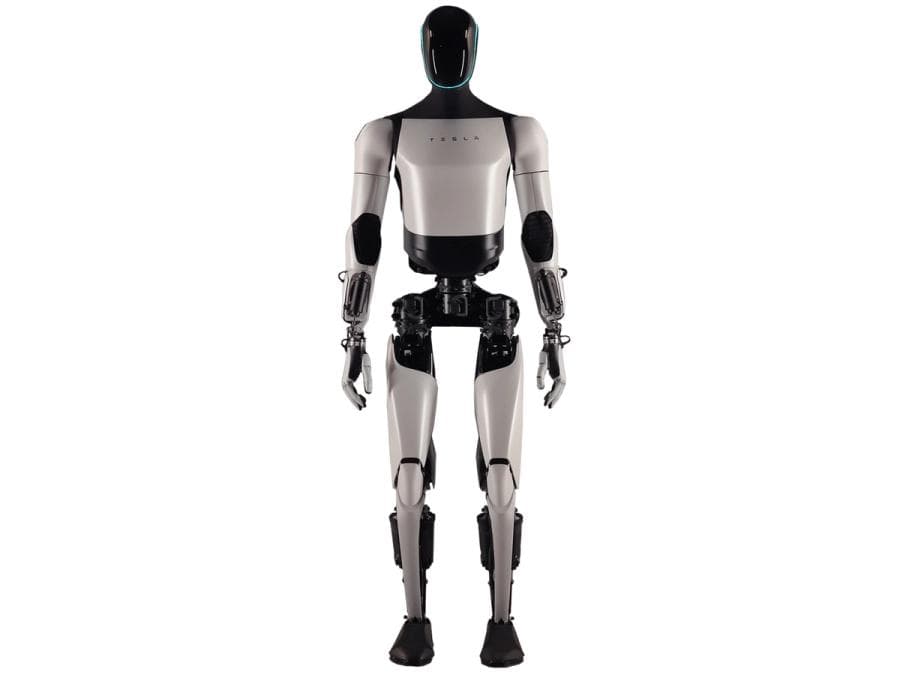
Fourier GR-1 vs Tesla Optimus Gen 2
Last updated: July 2026
Comparison Overview
Tesla Optimus Gen 2 stands at 173cm tall, making it 8cm taller than Fourier GR-1 at 165cm. In terms of articulation, Fourier GR-1 features 44 degrees of freedom while Tesla Optimus Gen 2 has 40 DOF, giving Fourier GR-1 greater dexterity. Battery life gives Tesla Optimus Gen 2 an advantage with 8 hours of continuous operation versus Fourier GR-1's 1 hours. For carrying capacity, Tesla Optimus Gen 2 can handle 20kg payload versus Fourier GR-1's 3kg. Both robots are classified as General Purpose humanoids.
Quick Verdict
Choose Fourier GR-1 if you need:
- More degrees of freedom (44 DOF)
Choose Tesla Optimus Gen 2 if you need:
- Higher payload capacity (20kg)
- Longer runtime (8 hours)
- Larger battery capacity (2.3kWh)
- Taller stature (8cm taller)
Frequently Asked Questions
Detailed Specifications
| Specification | Fourier GR-1 | Tesla Optimus Gen 2 |
|---|---|---|
| Physical Dimensions | ||
| Height | 165 cm | 173 cm |
| Weight | 55 kg | 55 kg |
| Width | 51.5 cm | Not Disclosed |
| Depth | 32 cm | Not Disclosed |
| Performance | ||
| Walking Speed | 1.4 m/s | Not Disclosed |
| Max Speed | 5 km/h | 8 km/h |
| Payload Capacity | 3 kg | 20 kg |
| Max Lift | 50 kg | 68 kg |
| Max Carry | 50 kg | Not Disclosed |
| Degrees of Freedom | ||
| Total DOF | 44 | 40 |
| DOF per Arm | 7 | 7 |
| DOF per Hand | 6 | 11 |
| DOF per Leg | 6 | 6 |
| Max Joint Torque | 230 Nm | Not Disclosed |
| Power & Battery | ||
| Runtime | 1 hours | 8 hours |
| Battery Capacity | 0.46 kWh | 2.3 kWh |
| Battery Type | Lithium-ion rechargeable | Lithium-ion |
| Swappable Battery | No | No |
| Processing & Computing | ||
| Processor | Intel Core i7-13700H | Tesla FSD (Full Self-Driving) Computer with dual SoC architecture |
| RAM | 16 GB | Not Disclosed |
| Operating System | Linux (ROS compatible) | Not Disclosed |
| Sensors & Cameras | ||
| Camera Resolution | 360° RGB + Intel RealSense | Not Disclosed |
| Depth Cameras | 1 | 0 |
| Stereo Cameras | 0 | 0 |
| LiDAR | No | No |
| Force Sensors | Yes | Yes |
| IMU | Yes | No |
| Tactile Sensors | No | Yes |
| AI & Intelligence | ||
| Computer Vision | Yes | No |
| Object Recognition | Yes | No |
| Facial Recognition | Yes | No |
| Voice Recognition | Yes | No |
| NLP | Yes | No |
| SLAM | Yes | No |
| Path Planning | Yes | No |
| Connectivity | ||
| WiFi | Yes | No |
| WiFi Standard | 802.11ac/ax | Not Disclosed |
| Bluetooth | Yes | No |
| Ethernet | Yes | No |
| 5G | No | No |
| Developer Features | ||
| SDK Available | Yes | No |
| API Available | Yes | No |
| ROS Support | Yes | No |
| ROS Version | ROS 2 | Not Disclosed |
| Open Source | Yes | No |
| Safety | ||
| Emergency Stop | Yes | No |
| Collision Detection | Yes | No |
| Pinch Proof | No | No |
| Pricing & Availability | ||
| Availability | Shipping (limited) | prototype |
| Model Year | 2023 | 2023 |