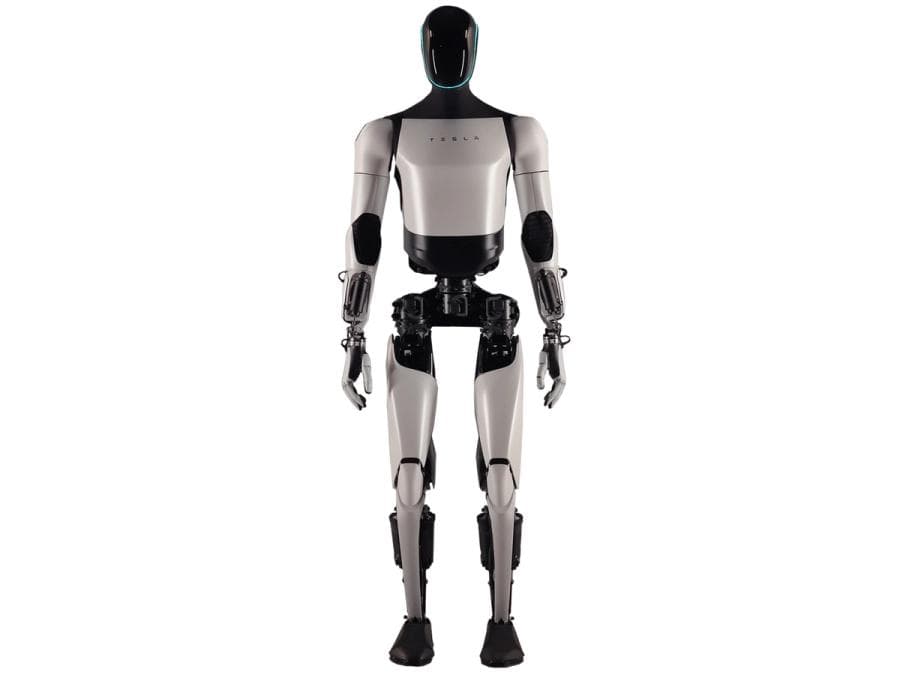
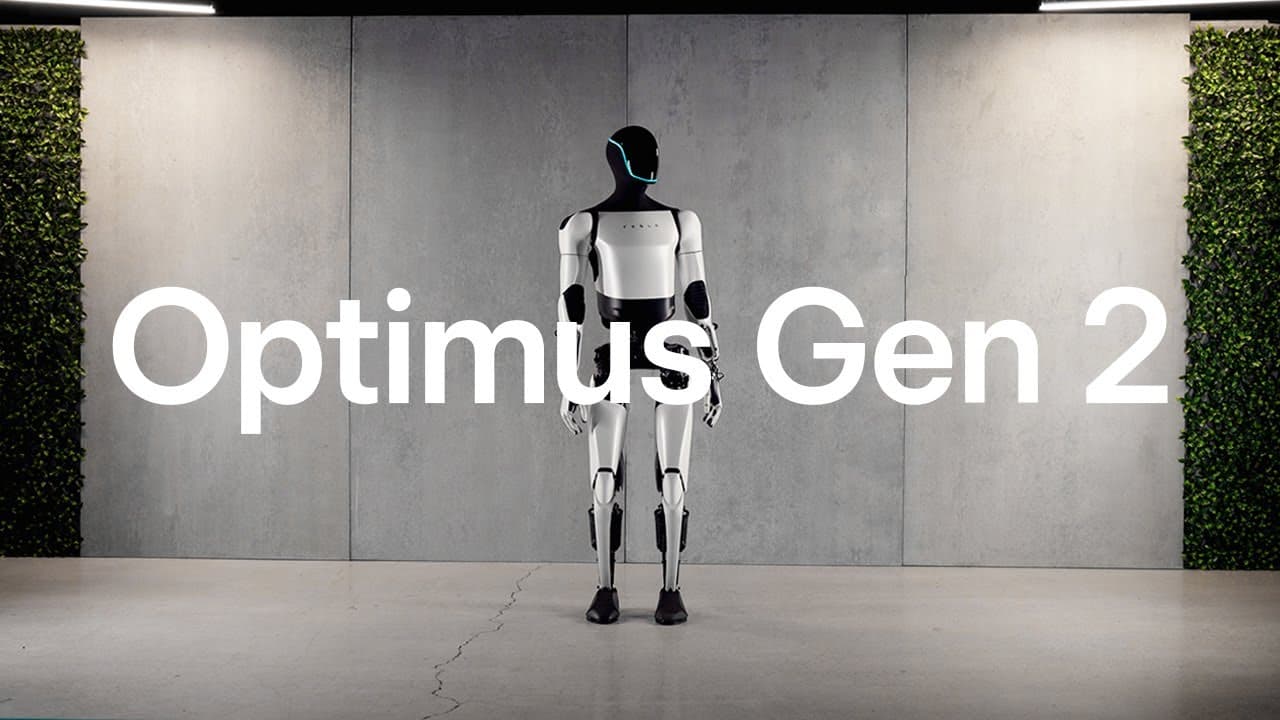
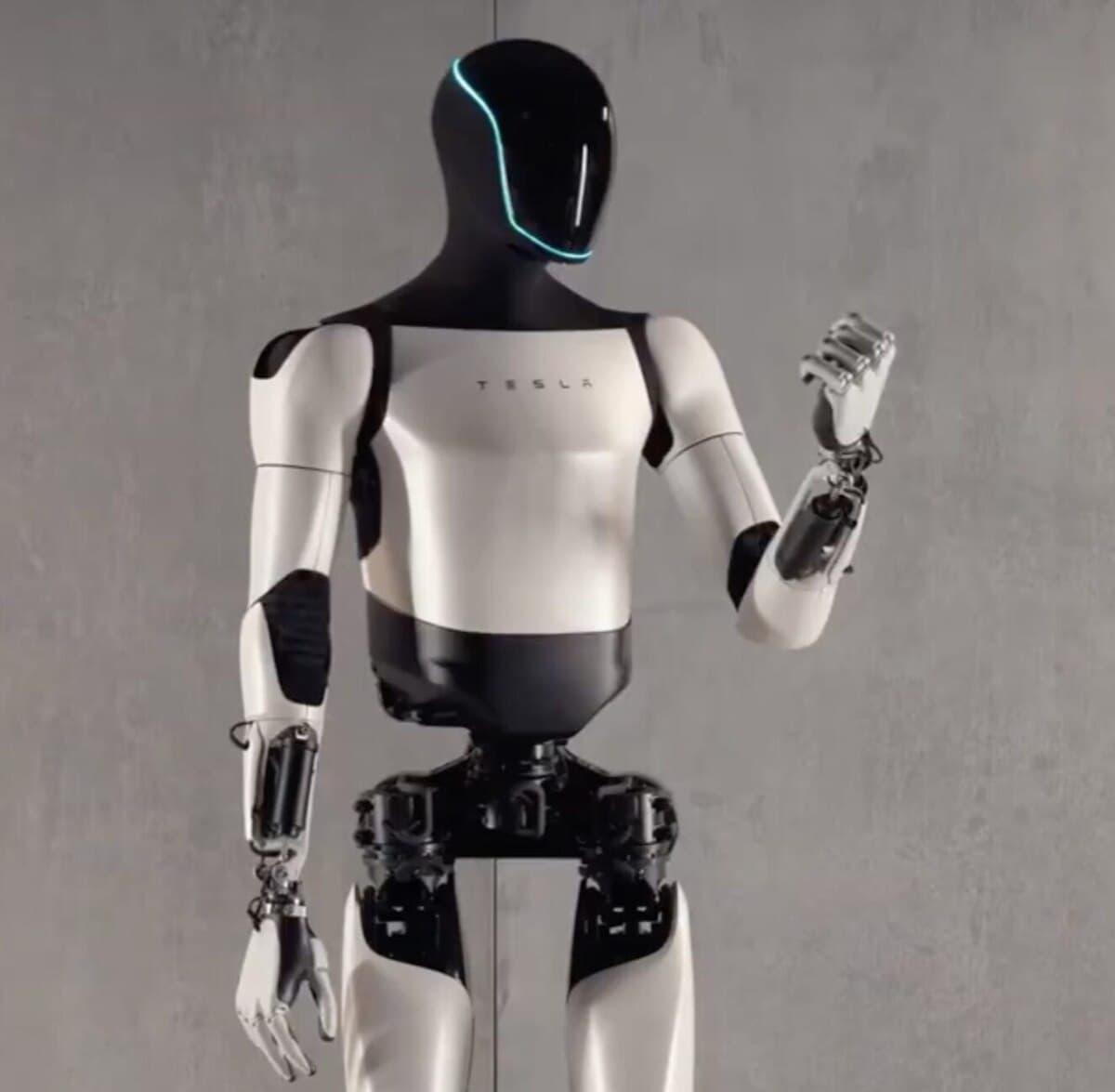
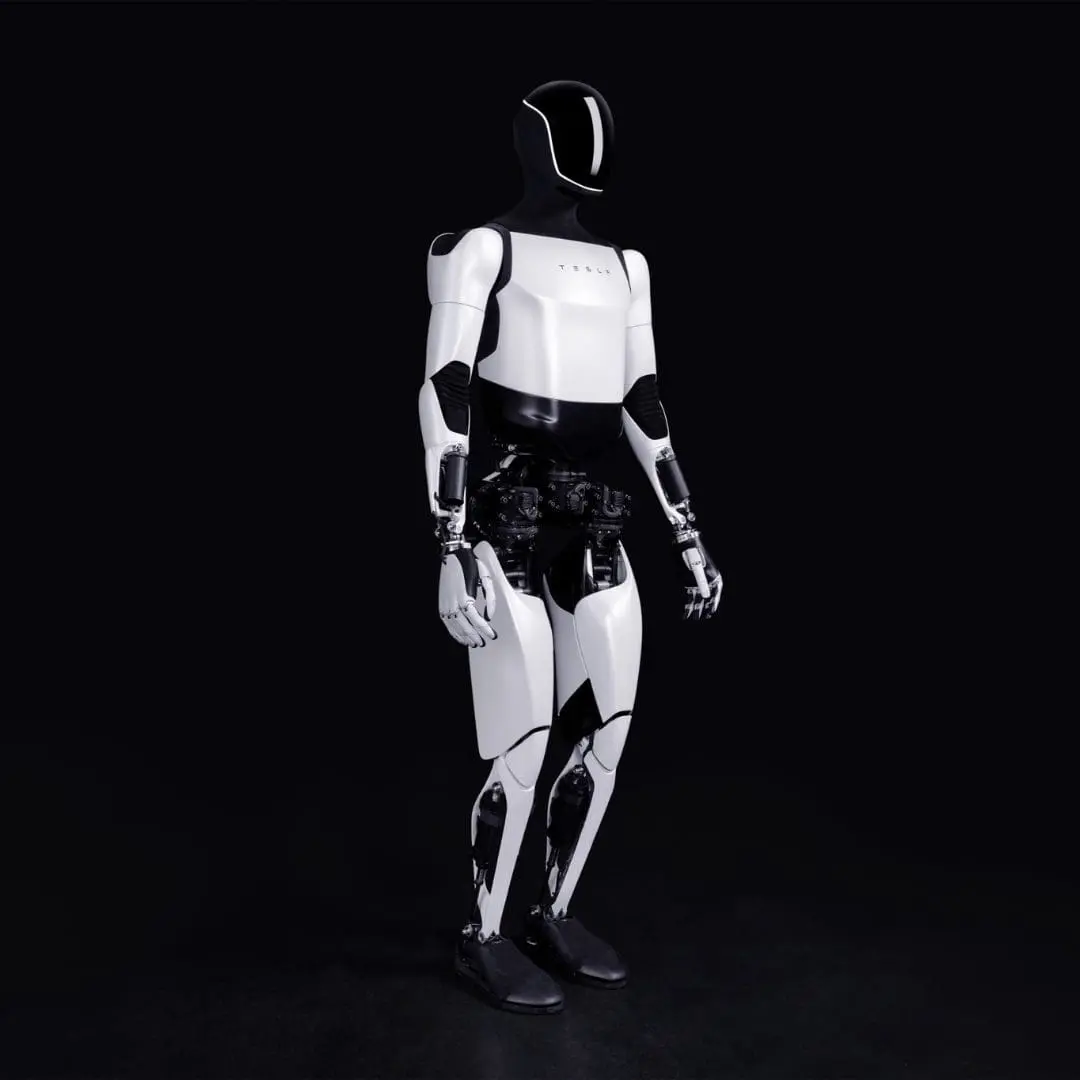
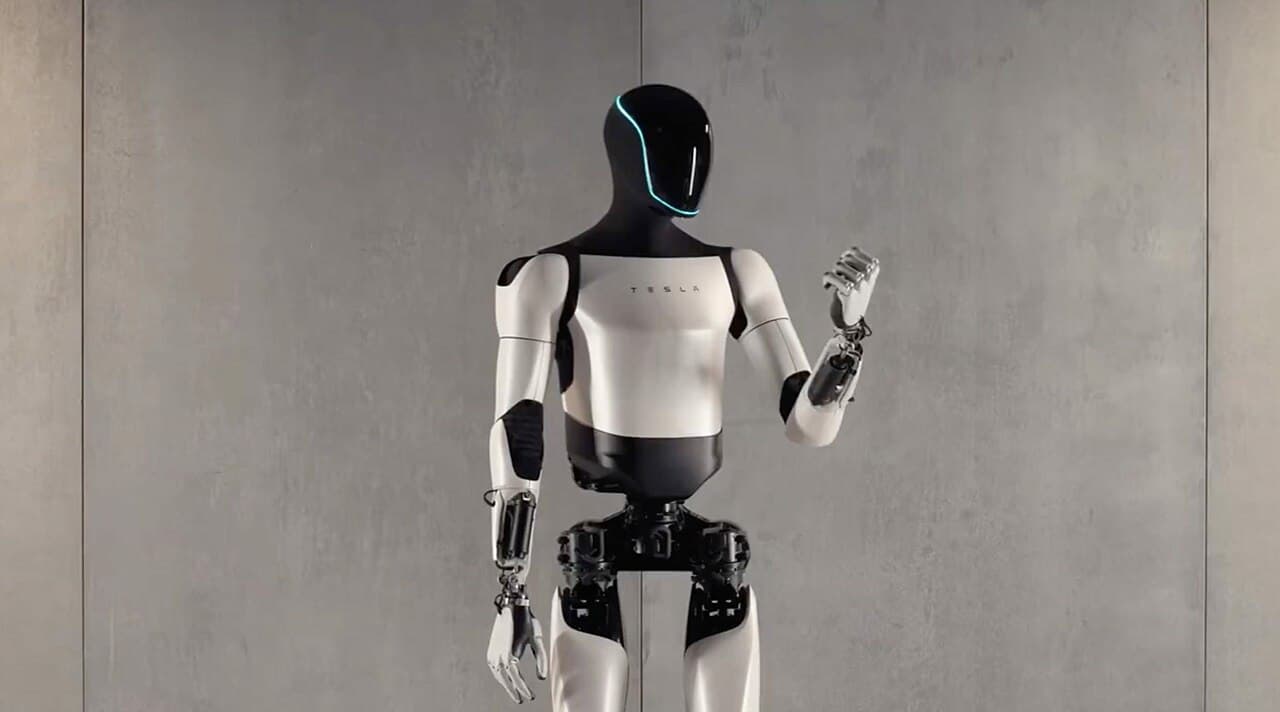
Tesla Optimus Gen 2 is the second-generation prototype in Tesla, Inc.'s ambitious humanoid robotics program. First unveiled through a demonstration video on December 13, 2023, Gen 2 represents a quantum leap forward from the rudimentary first-generation "Bumblebee" prototype that walked on stage at AI Day 2 in September 2022. With significant hardware upgrades, including Tesla-designed actuators, 11-DOF tactile hands, and a 10 kg weight reduction, Optimus Gen 2 marks Tesla's transition from concept validation to production-ready robotics.
Design Philosophy: Mass Production Meets Autonomy
Unlike most humanoid robots developed in research laboratories with hand-built prototypes, Tesla is designing Optimus from the ground up for mass manufacturing at automotive scale. This approach fundamentally shapes every design decision.
Tesla's vertical integration—designing actuators, sensors, AI compute hardware, batteries, and control software entirely in-house—enables rapid iteration and cost optimization. The company leverages its existing manufacturing expertise, supply chains, and automation infrastructure developed for vehicle production. Where traditional robotics companies might build hundreds of units, Tesla is planning production lines capable of 1 million robots per year, with future facilities targeting 10 million annually.
The Gen 2 design emphasizes modularity and serviceability. Arms, hands, battery packs, and major subsystems can be detached and replaced, simplifying maintenance and repairs. Standardized actuators reduce parts complexity and inventory requirements. This manufacturing-first mindset aims to drive per-unit costs down to Tesla's target of under $25,000—a fraction of what current humanoid robots cost.
Tesla-Designed Actuators and Sensors
One of Gen 2's most significant upgrades is the complete replacement of off-the-shelf components with proprietary Tesla-designed actuators and sensors. The robot incorporates approximately 40 actuators distributed across its body, providing human-like range of motion. Each joint includes position encoders for precise movement tracking and torque sensors for force control—critical for safe human interaction and delicate manipulation tasks.
The 2-DOF articulated neck allows the robot to tilt its head forward/backward and rotate left/right, improving sensor coverage and enabling more natural, human-like gestures. Foot force/torque sensors with human-inspired geometry enable dynamic balance, allowing the robot to adjust its stance in real-time, recover from slips, and navigate uneven surfaces.
11-DOF Tactile Hands
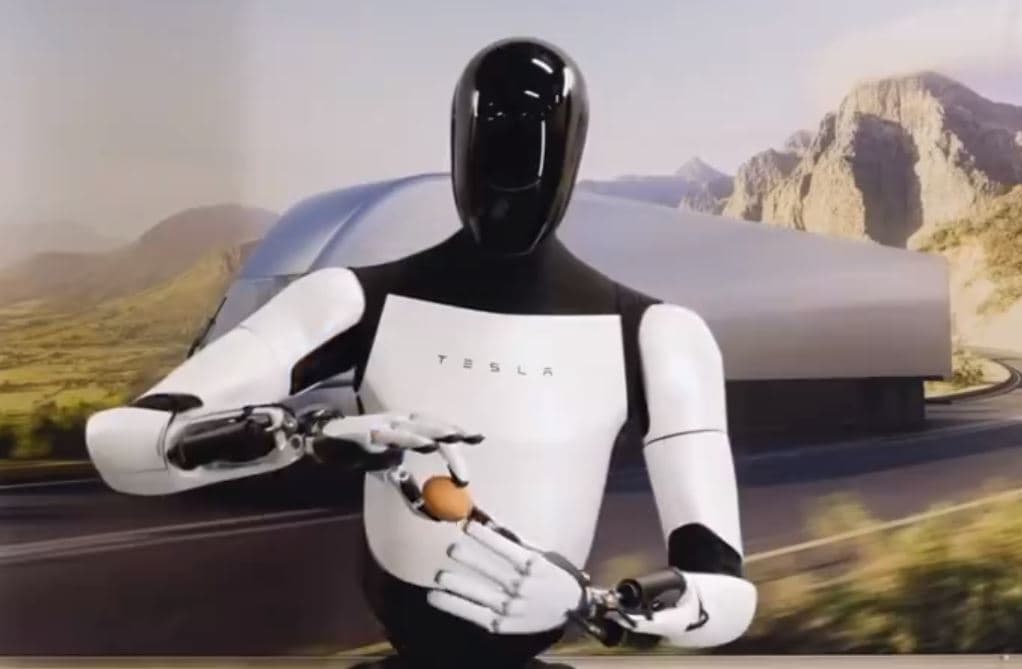
Optimus Gen 2's hands represent one of its most impressive engineering achievements. Each five-fingered hand features 11 degrees of freedom—allowing for highly articulated, human-like grasping and manipulation. What makes these hands truly special is the integration of tactile sensors on all fingers.
In Tesla's December 2023 demonstration video, Optimus Gen 2 successfully picked up a raw egg from a carton, transferred it between hands, and set it down without cracking it—a task requiring precise force modulation. The hands enable Optimus to grasp objects of varying shapes and sizes, use human tools, perform assembly tasks, and handle soft materials without damage.
Vision-Only AI and Perception
Following Tesla's approach with vehicle autonomy, Optimus uses a vision-only perception system with no LiDAR or radar sensors. The robot relies on eight cameras positioned around its head and body to create a 360-degree view of its environment. Neural networks process these camera feeds in real-time to detect objects, estimate depth, build 3D maps, and recognize specific items for manipulation.
The robot's "brain" is Tesla's FSD (Full Self-Driving) Computer—a custom System-on-Chip featuring neural processing units capable of over 36 trillion operations per second. This enables real-time inference of complex neural networks for vision, planning, and control—all running onboard without requiring cloud connectivity for core functions.
Battery and Power Management
The Gen 2 prototype is powered by a 2.3 kWh lithium-ion battery pack at 52V, providing approximately 8 hours of operation during typical light-duty tasks. Tesla has indicated that Optimus units can autonomously navigate to charging stations when battery levels drop, then resume work after recharging—enabling continuous factory operation across multiple shifts.
Software Architecture and AI Training
Optimus runs a custom Linux-based operating system developed specifically for robotics. Tesla uses reinforcement learning extensively to train robot behaviors in simulated environments where virtual robots attempt tasks millions of times, learning optimal strategies through trial and error.
The December 2023 demonstration of Optimus Gen 2 dancing showcases this approach. The smooth, coordinated dance routine was trained entirely in simulation using reinforcement learning, then executed in the real world with no additional programming—a technique called "zero-shot sim-to-real transfer."
Connectivity and Fleet Learning
Optimus Gen 2 is equipped with 5G cellular and Wi-Fi connectivity for over-the-air software updates, telemetry, and fleet learning. As robots encounter new scenarios, that data flows back to Tesla's central AI training systems, and improved models are distributed to all robots—creating a positive feedback loop where each robot benefits from the collective experience of the entire fleet.
Current Deployment and Real-World Testing
As of 2025, Optimus Gen 2 units are deployed internally at Tesla's own factories for real-world testing. Tasks include moving parts between workstations, organizing inventory, basic assembly operations, and quality inspection assistance. This internal deployment validates reliability, generates training data, and demonstrates economic value.
Safety and Human Interaction
Tesla has designed Optimus Gen 2 with inherent safety limitations: maximum speed around 5 km/h (humans can easily evade), weight of 55 kg (light enough to physically overpower), and limited strength comparable to average humans. Active safety systems include emergency stop, collision detection via vision and force sensors, torque limiting, and tactile feedback to prevent crushing or pinching.
Availability and Pricing
Optimus Gen 2 is currently not available for purchase. Timeline projections suggest limited production for select commercial customers in late 2025, broader commercial availability in 2026 (potentially through leasing or Robot-as-a-Service models), and consumer market availability in 2027+ as production scales.
Tesla has stated a long-term target of under $25,000 per unit. The company is building a pilot production line targeting 1 million units per year, with plans for a second facility aiming for 10 million units annually.
History
-
August 19, 2021: Tesla announces "Tesla Bot" concept at AI Day with initial specifications and vision for a general-purpose humanoid robot.
-
September 30, 2022: At AI Day 2, Tesla unveils the first functioning Optimus prototype "Bumblebee," which walks on stage untethered and waves to the audience.
-
September 2023: Demonstration video shows Optimus autonomously sorting colored blocks and performing yoga poses, highlighting improved vision and balance control.
-
December 13, 2023: Optimus Gen 2 officially unveiled with major upgrades including 10 kg weight reduction, 30% faster walking, 11-DOF tactile hands, 2-DOF articulated neck, and improved foot sensors. The robot demonstrates delicately handling a raw egg.
-
June 2024: Ashok Elluswamy, Tesla's VP of AI Software and Autopilot head, assumes leadership of Optimus, deepening FSD and robotics AI integration.
-
July 2024: Optimus Gen 2 displayed publicly at World AI Conference in Shanghai, drawing large crowds.
-
October 10, 2024: At Tesla's "We, Robot" event, multiple Optimus units interact with attendees. Later reports confirm complex interactions were largely teleoperated, though basic locomotion was autonomous.
-
November 2025: Elon Musk reveals plans for pilot production line targeting 1 million units per year, positioning Optimus as potentially "the biggest product of all time."
-
2025 (Ongoing): Internal factory deployments continue expanding, with limited commercial availability projected for late 2025 or 2026.