History
AgiBot has rapidly evolved from startup to production-scale manufacturer in just under three years, achieving milestones that position it as a serious contender in China's humanoid robotics race.
- February 2023: AgiBot (Zhiyuan Robotics) founded in Shanghai by Peng Zhihui and Deng Taihua
- April 2023: Completed angel round funding (details undisclosed)
- August 2023: Announced development of GO-1 AI foundation model for humanoid robotics
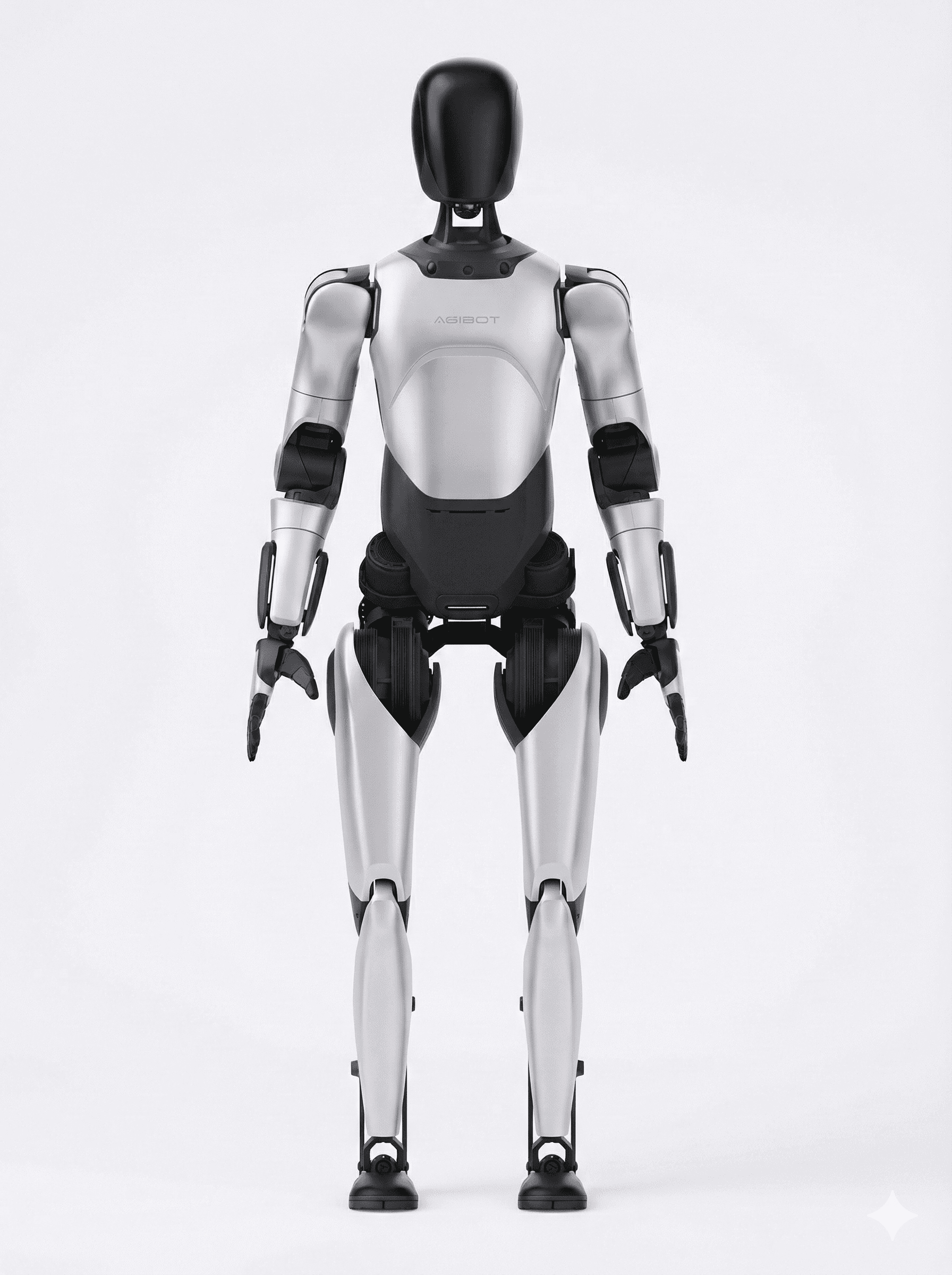
- November 2023: Unveiled RAISE A1 humanoid robot prototype at public demo event
- January 2024: Opened first manufacturing factory in Shanghai to begin volume production
- March 2024: Raised Series A funding led by Tencent and JD.com, valuation reached ~$2.1 billion
- May 2024: Opened 21,000 square meter (226,000+ sq ft) manufacturing facility in Shanghai
- August 2024: Launched the Yuanzheng A2 series and Lingxi X1/X2 lower-body robots
- September 2024: Opened "AIDEA" giga-data lab in Shanghai for large-scale robot data collection
- October 2024: Secured additional funding from LG Electronics and BYD for international expansion
- January 2025: Achieved milestone of 1,000 units cumulative production across all robot models
Key Investors
AgiBot has attracted investment from major Chinese and international technology companies:
- Tencent - Lead investor in Series A round, major Chinese tech conglomerate
- JD.com - Strategic investor and potential commercial partner for logistics applications
- LG Electronics - International investor focused on consumer robotics opportunities
- BYD - Electric vehicle and battery manufacturer providing strategic investment
- Multiple Chinese VC firms and undisclosed angel investors
Manufacturing Capabilities
The company operates a 21,000 square meter (226,000+ sq ft) state-of-the-art manufacturing facility in Shanghai equipped for high-volume production. As of January 2025, AgiBot has produced over 1,000 units across all robot models, making it one of the first Chinese humanoid robotics companies to achieve four-digit production volumes.
The facility is designed to scale production as demand increases, with plans for additional manufacturing capacity to support AgiBot's goal of making humanoid robots accessible to broader markets.
GO-1 AI Foundation Model
All AgiBot robots are powered by the proprietary GO-1 AI foundation model, which provides:
- Natural language understanding for voice commands and conversational interaction
- Adaptive learning that improves performance through user interactions
- Task generalization enabling robots to apply learned skills across different environments
- Multi-modal sensory processing integrating vision, audio, and tactile feedback
The GO-1 model differentiates AgiBot from competitors who rely on third-party AI systems, giving the company full control over the intelligence layer of their robots.
Target Markets
AgiBot's diverse product lineup targets multiple commercial and consumer segments:
- Industrial Automation - Manufacturing assembly, quality inspection, material handling
- Logistics & Warehousing - Order fulfillment, inventory management, goods transport
- Retail & Commercial Services - Customer assistance, inventory tracking, store operations
- Consumer Home Assistance - Household tasks, companionship, elderly care support