History
Tesla's evolution into humanoid robotics builds on two decades of innovation in electric vehicles and autonomous systems, with the Optimus program emerging as a strategic priority.
-
July 2003: Tesla, Inc. (originally "Tesla Motors") founded by Martin Eberhard and Marc Tarpenning in San Carlos, California, with the mission to accelerate sustainable transportation through electric vehicles.
-
2004: Elon Musk joins as chairman and lead investor, contributing to the Series A funding round and eventually becoming CEO in 2008.
-
June 2010: Tesla goes public on NASDAQ (ticker: TSLA), raising $226 million and becoming the first American car company to IPO since Ford in 1956.
-
2012-2014: Tesla launches the Model S luxury sedan (2012) and deploys its Autopilot semi-autonomous driving system (2014), establishing the company's AI and computer vision capabilities.
-
2017: Company officially changes name from "Tesla Motors, Inc." to "Tesla, Inc." to reflect expansion beyond vehicles into energy storage, solar products, and emerging technologies.
-
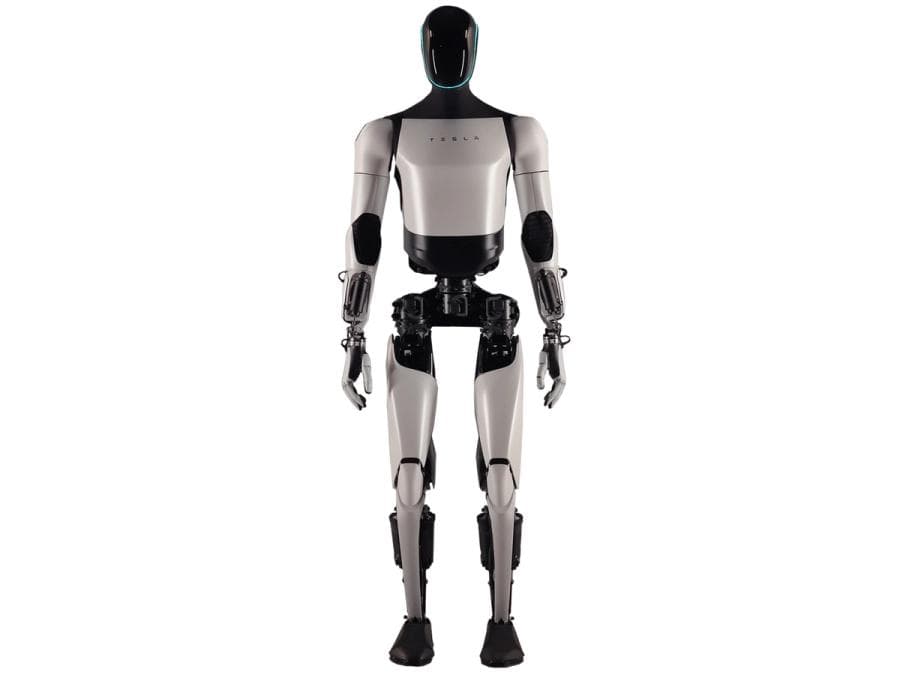
August 2021: Optimus program announced at Tesla's first AI Day. Initially called "Tesla Bot," the concept is introduced with a vision for general-purpose humanoid robots to handle dangerous and repetitive tasks.
-
September 2022: First Optimus prototypes revealed at AI Day 2. A rough prototype ("Bumblebee") walks on stage, while a more refined version demonstrates arm and hand movement—marking Tesla's entry into functional humanoid robotics.
-
September 2023: Tesla releases video showing Optimus autonomously sorting colored blocks and performing yoga poses, demonstrating improved AI-based object recognition and physical dexterity.
-
December 2023: Optimus Gen 2 unveiled with significant improvements: 10 kg lighter, 30% faster walking speed, enhanced balance, and new 11-DoF hands with tactile sensing capable of handling delicate objects like eggs.
-
June 2024: Leadership transition—Milan Kovac, Optimus program head, departs. Ashok Elluswamy, Tesla's VP of AI Software and head of Autopilot, assumes leadership of Optimus, deepening integration between FSD and robotics AI.
-
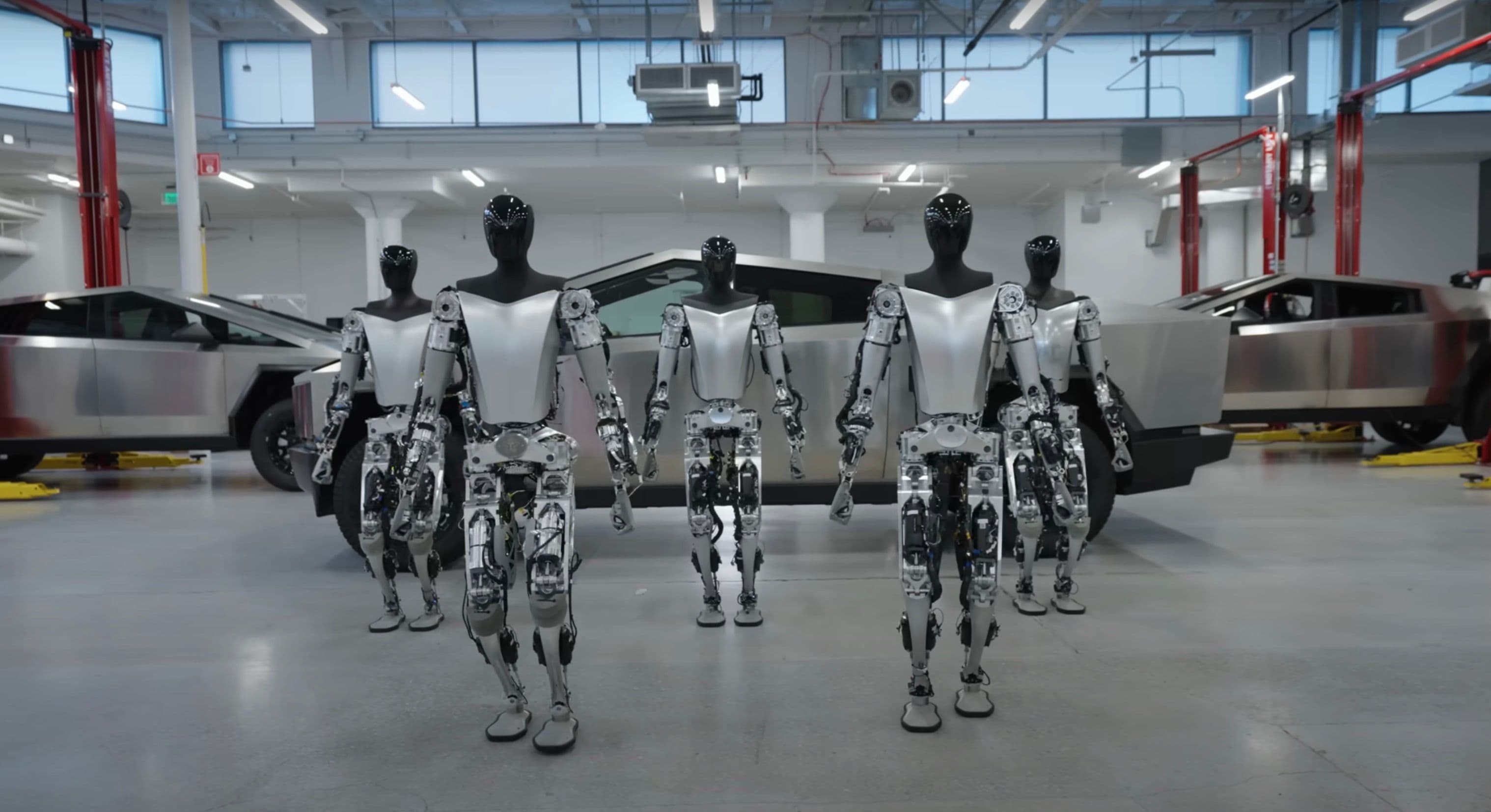
October 2024: At the "We, Robot" event, Tesla showcases multiple Optimus units operating together, walking among attendees, carrying items, and performing synchronized demonstrations. Musk reiterates the goal of mass production at under $30,000 per unit.
-
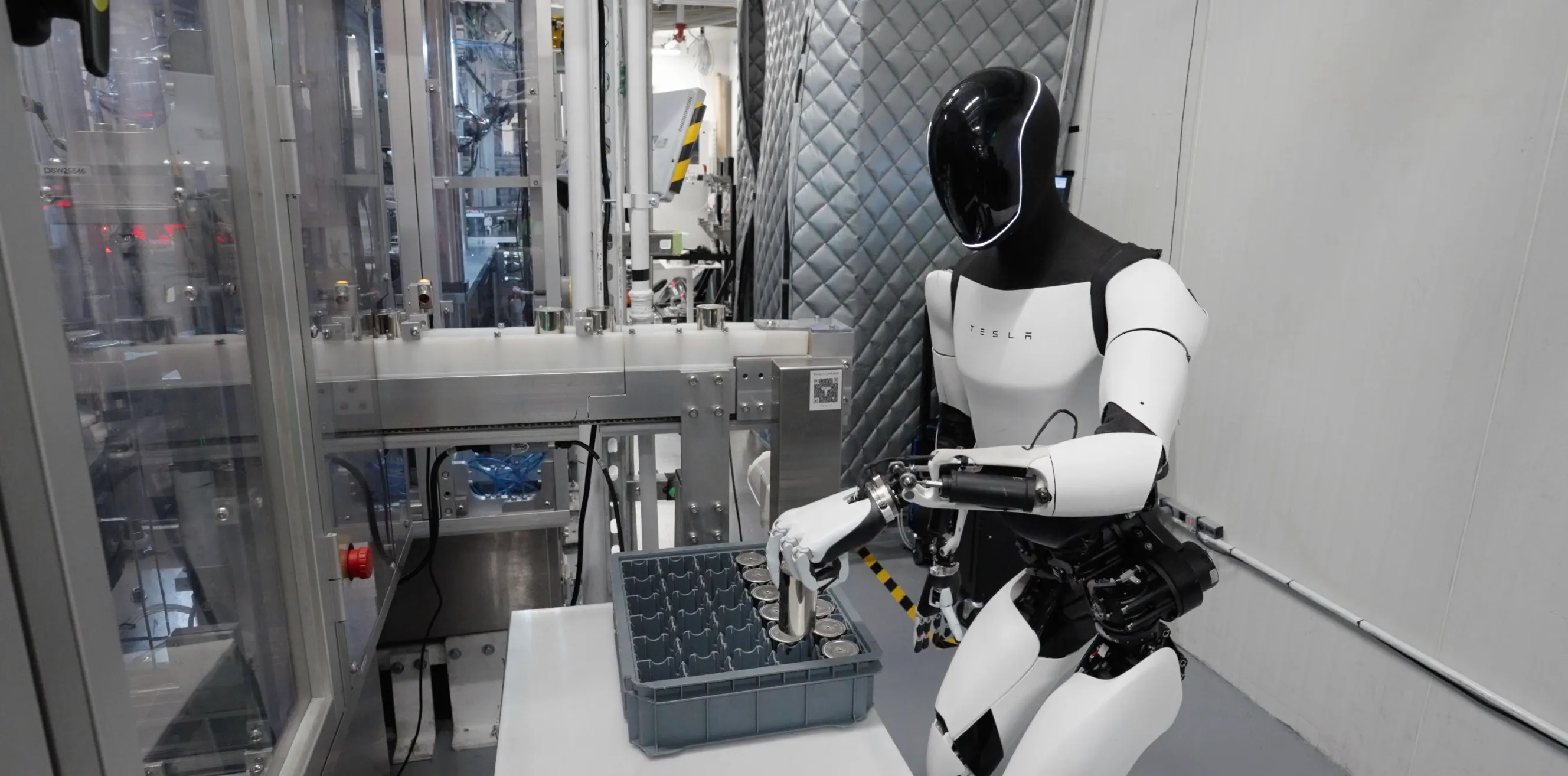
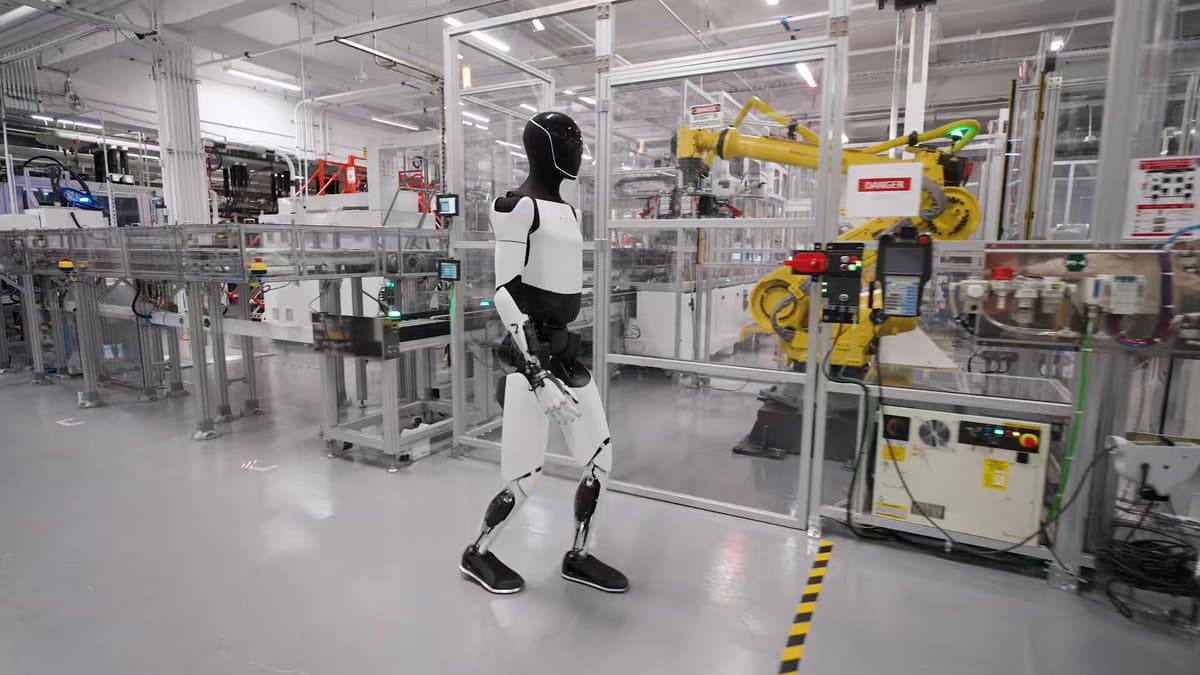
Late 2024: Internal factory deployment begins—Optimus units perform autonomous tasks in Tesla facilities, including component assembly, sorting, and quality inspection, providing real-world operational data for AI training.
AI and Autonomy Integration
Tesla's humanoid robotics program is built directly on the foundation of its Full Self-Driving (FSD) technology. The same neural network architectures, computer vision systems, and real-time inference capabilities developed for autonomous vehicles are adapted for Optimus.
Key Technical Synergies:
- Vision-Based Perception: Both FSD and Optimus rely on camera-based vision systems (rather than LiDAR) to perceive and navigate dynamic environments.
- Neural Network Training: Tesla's massive data infrastructure—collecting billions of miles of driving data—is paralleled in robotics through factory deployments, where Optimus units generate operational data for continuous AI improvement.
- Unified Leadership: Ashok Elluswamy leads both Autopilot and Optimus programs, ensuring seamless knowledge transfer and technical alignment between automotive and humanoid AI development.
This integration allows Tesla to leverage over a decade of AI investment across both vehicle autonomy and robotics, creating a unique competitive advantage.
Manufacturing Vision
Tesla's approach to humanoid robotics emphasizes manufacturing at scale, treating robots as products to be mass-produced like vehicles. The company has developed internal concepts for high-volume robot production:
- BotQ Manufacturing: Tesla has explored purpose-built production systems designed to achieve unprecedented scale in humanoid robot manufacturing, drawing on lessons from automotive Gigafactories.
- Design for Manufacturing: The Optimus Gen 2 design features modular components and simplified assembly processes to reduce costs and enable rapid production scaling.
- Vertical Integration: By controlling the entire process—from AI software development to hardware design, manufacturing, and deployment—Tesla can iterate faster and optimize for mass production economics.
The company's goal is to produce Optimus at volumes comparable to vehicles, driving per-unit costs down to the target of under $30,000—making humanoid robots economically accessible for commercial and eventually consumer use.
Future Outlook
Tesla views humanoid robotics as a transformative opportunity that could surpass its automotive business in long-term significance. CEO Elon Musk has stated that Optimus is central to the company's vision of creating "sustainable abundance" through mass-produced robotic labor.
Near-Term Focus (2024-2026):
- Expanding internal factory deployments to refine autonomous capabilities
- Achieving reliable performance in structured industrial environments
- Scaling manufacturing to enable commercial availability
Long-Term Vision:
- Deploying Optimus in commercial manufacturing, logistics, and warehouse operations at scale
- Introducing robots into household environments for domestic assistance
- Fundamentally reshaping labor economics through affordable, general-purpose humanoid robots
Tesla's unique combination of AI expertise, manufacturing scale, and strategic commitment positions Optimus as one of the most ambitious and well-resourced humanoid robotics programs in the world.