DOF (Degrees of Freedom)
What is DOF (Degrees of Freedom) in Humanoid Robotics?
The number of independent ways a robot or robot joint can move.
A human arm has 7 DOF (shoulder: 3, elbow: 1, wrist: 3). More DOF generally means more flexibility and dexterity, but also more complexity in control.
How DOF (Degrees of Freedom) Works
Each degree of freedom represents one independent direction of movement. A simple hinge joint (like an elbow) has 1 DOF - it can only bend and straighten. A ball-and-socket joint (like a shoulder) has 3 DOF - it can rotate around three perpendicular axes. The total DOF count for a humanoid robot is calculated by summing all the independent movements across all joints. Each DOF requires its own actuator and control system. When planning movements, the robot's motion planning algorithms must calculate appropriate positions for all DOFs simultaneously to achieve the desired end-effector position while avoiding obstacles and maintaining balance.
Types of DOF (Degrees of Freedom)
- Rotational DOF: Joints that rotate around an axis, like knees and elbows
- Translational DOF: Linear sliding movements, less common in humanoid robots
- Single-DOF Joints: Simple hinges or pivots
- Multi-DOF Joints: Complex joints like shoulders (3 DOF) or wrists (3 DOF)
- Whole-Body DOF: Total count including legs, arms, torso, neck, and hands
- End-Effector DOF: Specific DOF count for the hand or gripper affecting manipulation capability
Applications in Humanoid Robots
Higher DOF counts enable more human-like movement and greater task versatility. A 7-DOF arm can reach around obstacles, mimicking human arm capability. Hands with high DOF (20+ across all fingers) enable complex grasping and manipulation. Lower-body DOF (typically 12-18) determines walking stability and terrain adaptability. Torso and neck DOF enable natural posture and head orientation. The tradeoff is complexity - more DOF requires more sophisticated control algorithms and increases cost and weight.
Example Humanoid Robots
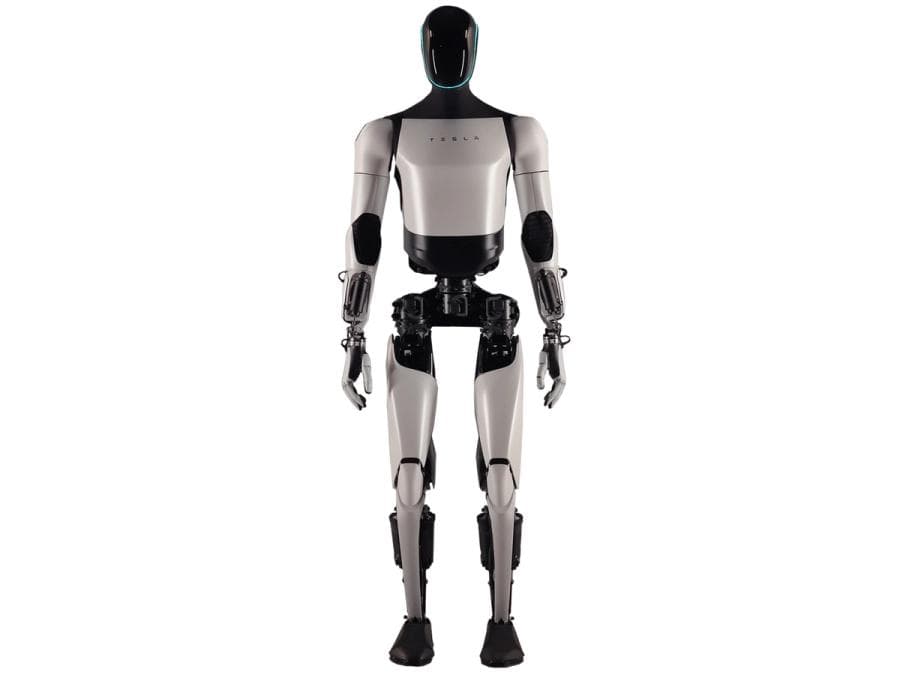
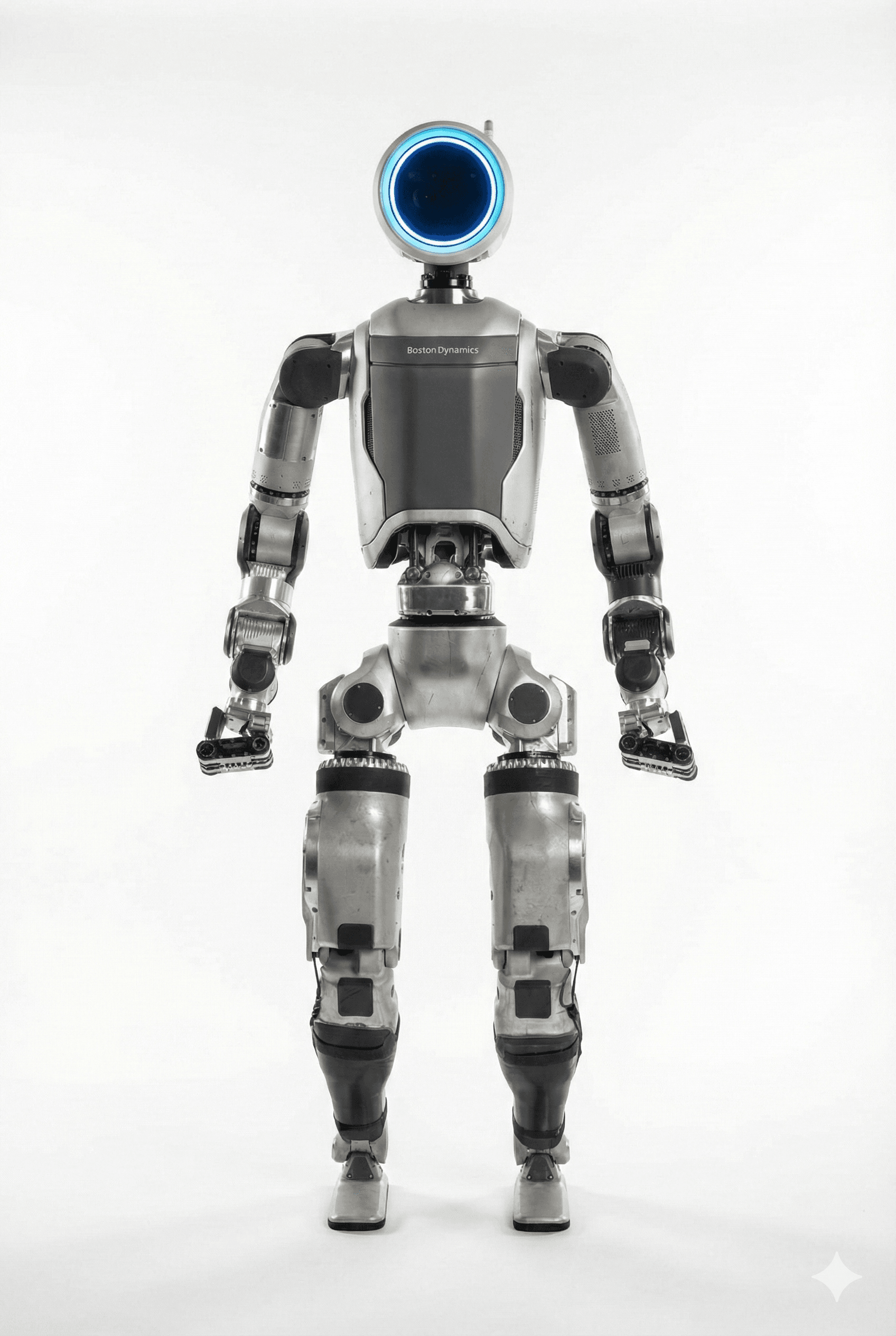
Boston Dynamics Atlas has approximately 28 DOF enabling highly dynamic movements. Tesla Optimus Gen 2 features 11 DOF in each hand for dexterous manipulation. Figure 02 has over 40 total DOF across its body. Unitree H1 balances performance with 19 DOF focused on efficient bipedal locomotion. Shadow Dexterous Hand offers 24 DOF, approaching human hand capability.