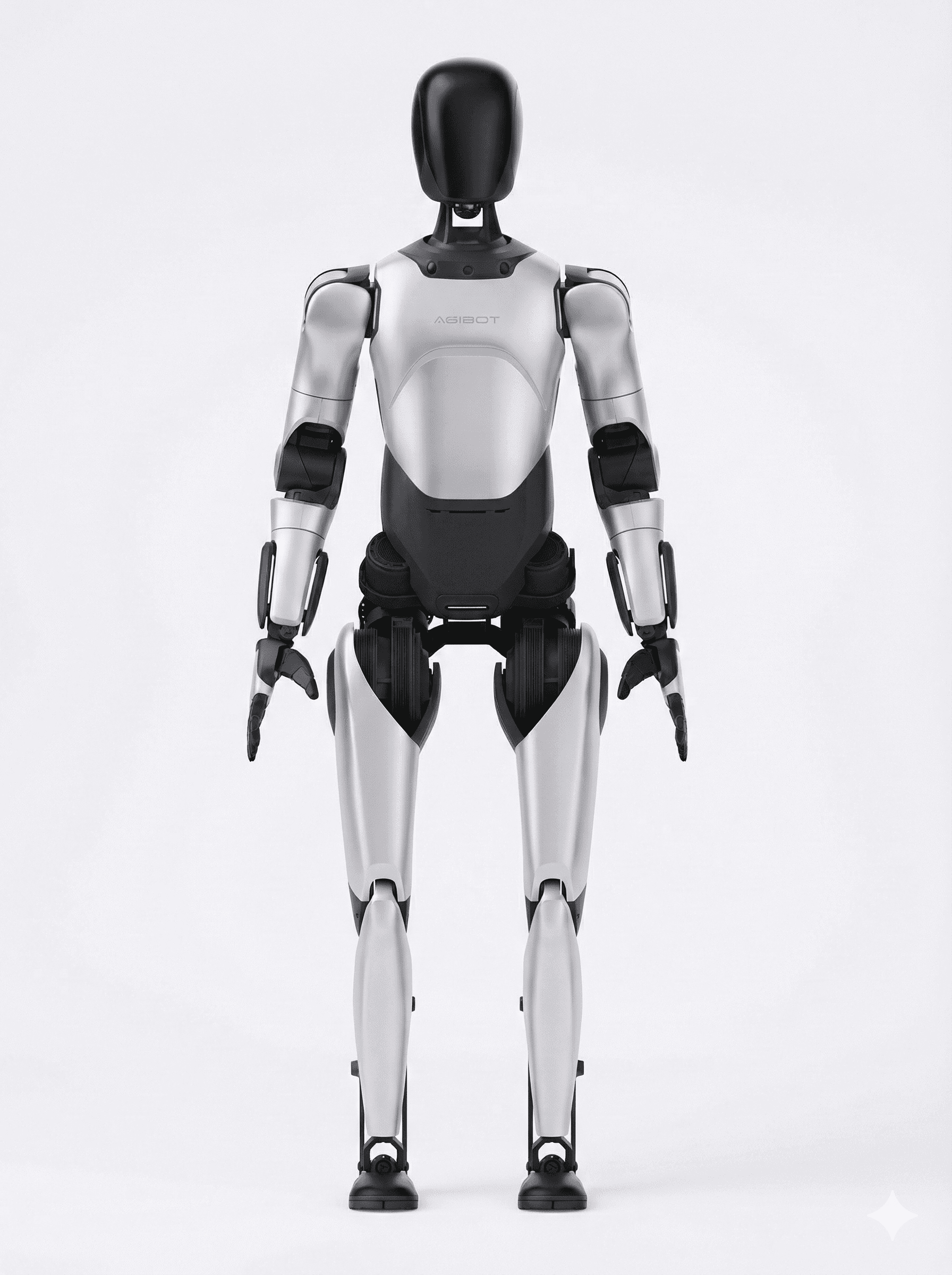
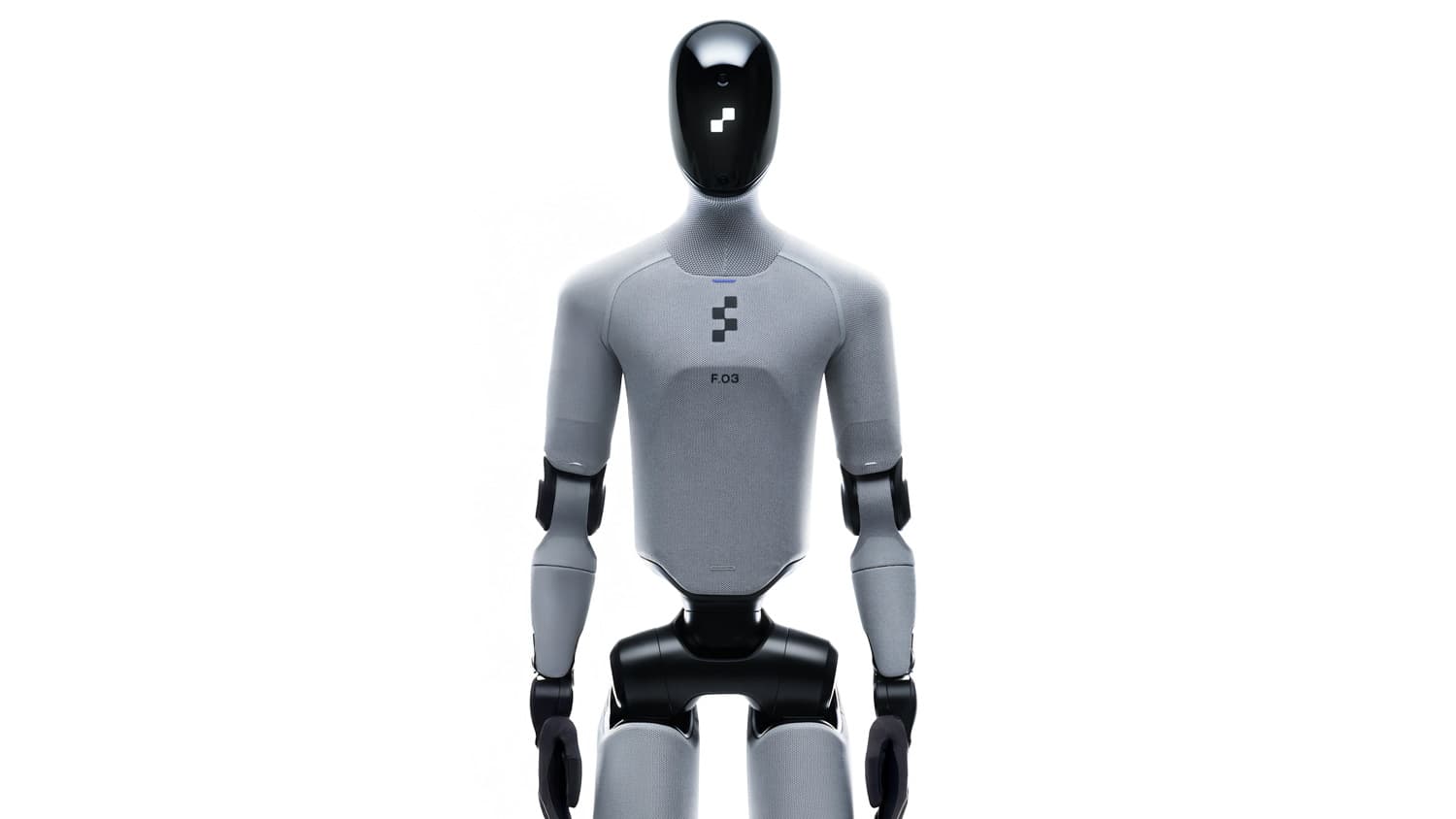
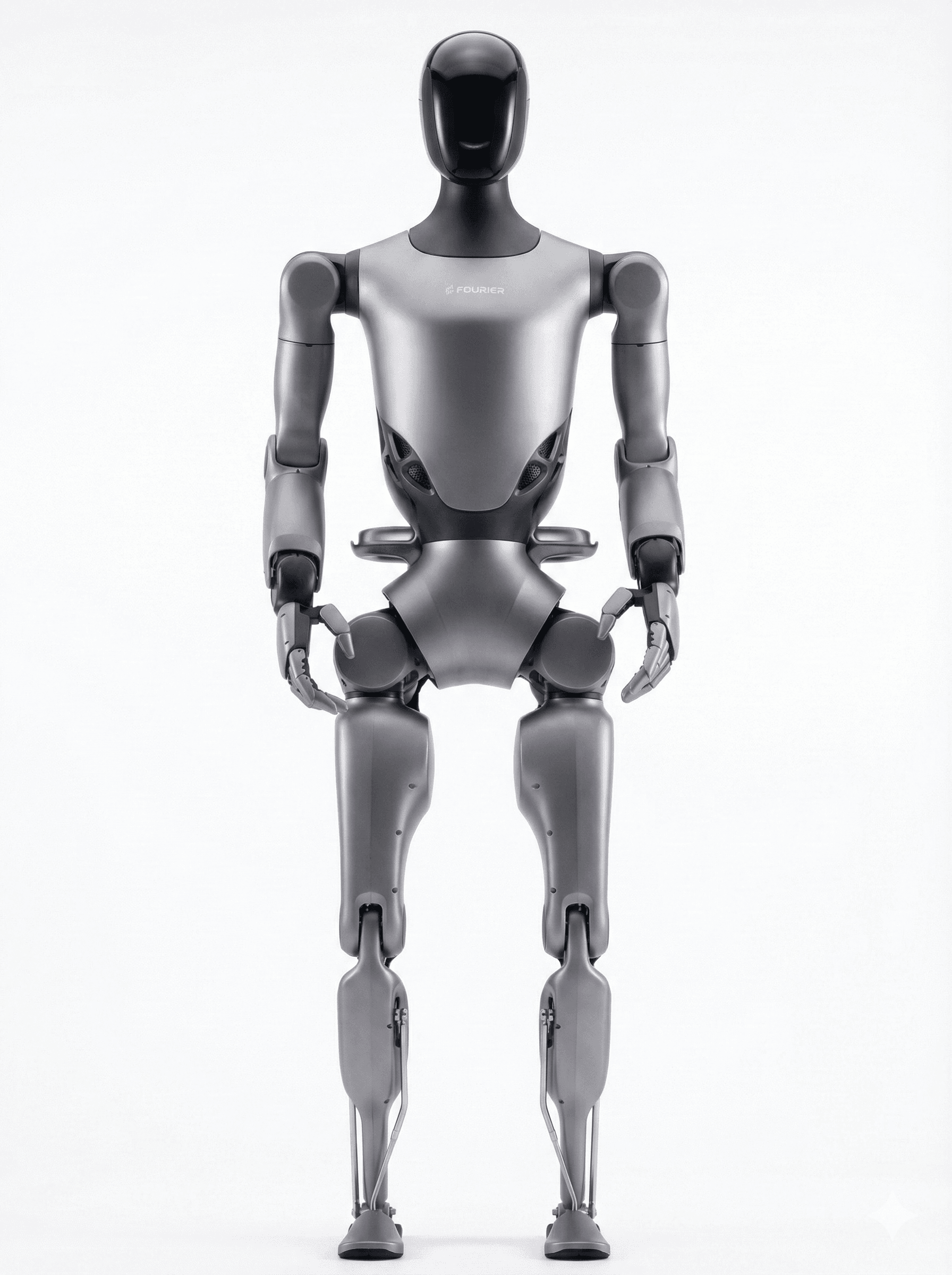
The Fourier GR-1 is a groundbreaking general-purpose humanoid robot launched in 2023 by Fourier Intelligence (formerly Fourier Intelligence). As one of the first mass-produced humanoid robots, with approximately 100 units delivered to research institutions by early 2024, GR-1 represents a significant milestone in making humanoid robotics accessible for real-world applications.
Design Philosophy: Practical Humanoid Robotics
GR-1's design centers on practicality, reliability, and human-centric functionality. Rather than pursuing bleeding-edge complexity, Fourier focused on creating a robot that could be mass-produced and deployed in real environments. At 165 cm tall—roughly average human height—GR-1 can operate in spaces designed for people, reach door handles, use standard furniture, and interact naturally with humans at eye level.
The robot's human-like proportions aren't just aesthetic; they enable GR-1 to navigate existing environments without modification. Stairs, doorways, workbenches, and tools are all designed for human dimensions, and GR-1 fits seamlessly into these spaces.
Fourier Smart Actuators: Integrated Power
At the heart of GR-1's capabilities are the proprietary Fourier Smart Actuators (FSA)—compact modules integrating motor, controller, gearbox, and encoder into single units. This all-in-one design delivers multiple advantages: reduced weight and bulk, simplified assembly, and enhanced reliability with each joint tested as a complete unit.
With peak torque of 230 N·m (and up to 300 N·m at the hips), these actuators provide extraordinary strength for a humanoid this size. This power enables GR-1 to perform dynamic motions like squatting with weight and execute quick balance corrections. The high torque is why GR-1 can carry 50 kg—nearly its own weight—making it genuinely useful for physically demanding tasks like patient transfers or material handling.
Vision-Only Perception: Seeing Like Humans
GR-1 takes a bold approach to perception: no LiDAR, just cameras and AI. Six RGB cameras plus one Intel RealSense depth camera provide 360° coverage. The system uses advanced Bird's Eye View (BEV) transformers and occupancy networks to create real-time 3D maps of the environment, processing visual data similarly to how self-driving cars build world models.
This camera-only strategy offers significant advantages: lower cost and weight compared to LiDAR systems, richer visual information (color, texture, the ability to read signs), and complete angular coverage. As AI models improve, GR-1's perceptual abilities can advance through software updates alone, without hardware changes. The system has demonstrated accurate detection and tracking of moving objects like people and vehicles in real-time.
AI-Powered Interaction: A Conversational Robot
GR-1 runs an onboard large language model (LLM)—similar to ChatGPT—enabling natural conversation and semantic understanding of commands. Instead of rigid programming, you can speak to GR-1 conversationally: "I left my keys in the kitchen, could you check if they're on the table?" The robot parses this request, breaks it into subtasks, and executes the mission autonomously.
This multimodal AI (combining vision and language) allows GR-1 to understand context and make intelligent decisions. The robot can recognize objects it sees, discuss them verbally, and adjust its behavior based on emotional cues. An integrated emotional AI system helps GR-1 respond appropriately—using softer tones when users seem upset or cheerful greetings in social settings.
Dexterous Manipulation: Human-Level Hands
GR-1 features genuine five-fingered hands with 6 degrees of freedom per hand (11 DoF in advanced versions). These dexterous hands enable both delicate pinch graps (picking up coins) and powerful grasps (carrying trays). The hands include force sensing to adjust grip strength, preventing crushing of fragile objects like glass bottles.
With these hands, GR-1 can use human tools and interfaces: turning door knobs, pressing vending machine buttons, typing on keyboards, or tying simple knots. This capability dramatically expands the robot's usefulness compared to simple grippers, enabling tasks requiring fine motor skills from dressing assistance to equipment repair.
Real-World Applications
GR-1 excels in scenarios where human form and behavior are advantageous:
Healthcare & Rehabilitation: GR-1 assists nurses by transporting medical supplies, supports patient transfers, and serves as a rehab coach demonstrating exercises. Its conversational abilities and empathetic responses make it suitable for eldercare companionship, medication reminders, and fall monitoring.
Research & Education: Universities use GR-1 as a platform for advancing robotics and AI research. The open SDK allows students and researchers to experiment with algorithms in locomotion, grasping, and human-robot interaction on a full-scale humanoid.
Service & Reception: As a robot receptionist or guide, GR-1 greets visitors, answers questions, provides directions, and even escorts guests. Its expressive face display and natural conversation create memorable, engaging interactions.
Security & Inspection: GR-1 can patrol facilities during off-hours, using cameras to detect anomalies. Its ability to navigate human environments—including potential ladder or stair use—makes it more versatile than wheeled security robots.
Connectivity and Development
GR-1 operates on Fourier's Robot Control System (RoCS) framework, which includes an open-source Client SDK supporting C++ and Python. The system is ROS 2 compatible, allowing integration with existing robotics projects. Developers can access pre-programmed motion libraries or create custom behaviors.
The platform supports simulation via NVIDIA Isaac Gym/Sim, enabling safe testing of complex behaviors before deployment on physical hardware. Wi-Fi, Bluetooth, and Ethernet connectivity allow for remote monitoring, cloud computing access, and multi-robot coordination.
History
GR-1 represents the culmination of years of development at Fourier Intelligence:
- 2023: GR-1 officially launched as one of the first mass-produced general-purpose humanoid robots
- Early 2024: Approximately 100 units delivered to research institutions including ETH Zurich and CMU
- Ongoing: Continuous software updates improving navigation, manipulation, and AI capabilities
GR-1 serves as the foundation for Fourier's humanoid series, with subsequent models (GR-2, GR-3) building on this proven platform with enhanced capabilities.